Author: Deshawnda Winters, PAWS Client
When people see me with my assistance dog, NIKE, they often stare. Some smile. Some whisper. And some assume I must be breaking the rules because I don’t look like what they think a “real” assistance dog handler should look like.
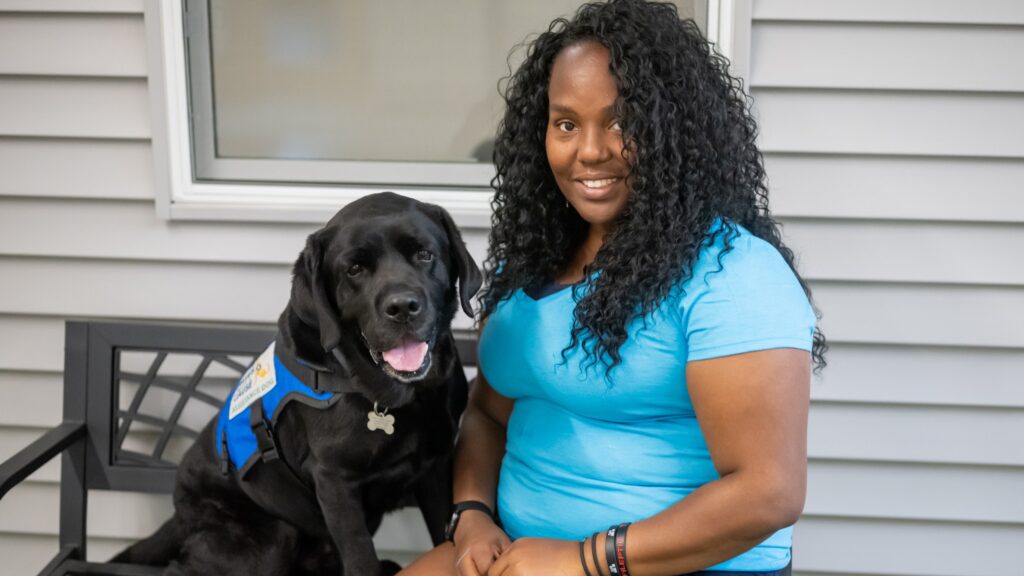
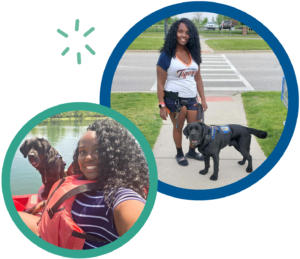
My name is Deshawnda Winters, and I live with epilepsy. On March 12, 2020, my life was forever changed when NIKE, a black Labrador retriever and Paws With A Cause (PAWS) Epileptic Seizure Response Dog, entered my life. He is not just a dog to me—he is my safety, my independence, and my lifeline. Together, we are living life with six legs and a tail.
But he is also a reminder of how much misunderstanding and bias still exist around disability, race, and assistance dogs.
Living With Epilepsy and the Safety of NIKE
Epilepsy is unpredictable. Some seizures are dramatic and visible, but others, like absence seizures, are quiet and often misunderstood. My mind can drift away without warning. I may stare, lose awareness, or behave in ways people misinterpret.
NIKE is trained to protect me during those moments. When I have a seizure, he pulls my emergency cord to alert others, retrieves my medication, unlocks the door for paramedics, and provides counterbalance support when my body is unstable. He is trained to speak for me in moments when I cannot speak for myself.
Because of NIKE, I can move through the world with more confidence and less fear.
The Day My Independence Was Challenged
NIKE and I were out walking just like any other day, when I had a seizure. I don’t remember the beginning of it clearly—only fragments. When I came back, I realized someone had separated NIKE from me.

A man assumed I was on drugs.
He told me I had no business having a dog like NIKE and accused me of being a drug addict. As I lay on the cold, hard ground, slowly becoming alert after a seizure, he held out a 20-dollar bill and said he would keep NIKE. I was confused, scared, and trying to explain through the fog of my seizure that NIKE was my seizure response dog and trained to help me.
The man insisted he knew what seizures looked like and said what I was experiencing wasn’t one. He yelled that I was spitting and pushing the dog, I tried to explain that those behaviors can happen during seizures and that NIKE is trained to handle them safely.
Then he said something that will stay with me forever.
He told me I didn’t look disabled and, “Black people are usually afraid of dogs.”
To get NIKE back from a stranger on the street, I had to show him my PAWS ID. The man gave him back and walked away without apologizing.
In that moment, I felt judged, misunderstood, and stripped of my dignity.
But I also realized something important: the public needs to understand that disability and assistance dogs exist in every community—including mine.
Challenging Misconceptions
That wasn’t the only time I faced discrimination with NIKE. I’ve had people question me, follow me, and even call the police on me because they didn’t believe NIKE was a real assistance dog, or that I was truly disabled.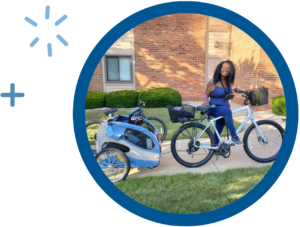
There are times I have to call PAWS headquarters for backup, just to prove that I am a legitimate assistance dog handler with a medically diagnosed disability.
In my community, and in many communities across the country, assistance dogs are still new to many people. I was once told I couldn’t bring NIKE onto a high school campus. I had to educate school staff about the Americans with Disabilities Act (ADA) and my legal right to be accompanied by an assistance dog.
Each of these moments was painful. But they also taught me how important education and representation are.
Disability Exists in Every Community
Disability does not have a single “look.” It doesn’t belong to one race, age group, or background. Yet, many people still imagine a very specific person when they think of an assistance dog handler.
In some communities, disability can be misunderstood or stigmatized. People are often encouraged to “push through” instead of seeking support. For people of color, this can make it even harder to access resources like assistance dogs—or to be believed when we do.
When people see me and NIKE together, I hope it’s an educational experience. I want them to see that disability is part of human life, and that support tools like assistance dogs are for anyone who needs them, no matter how they present to the naked eye.
Representation, Courage, and Moving Forward
Representation matters. When young people with disabilities—especially young people of color—see someone like them with an assistance dog, it can change how they see themselves. It affirms that their disability is real, their needs are valid, and support is available.
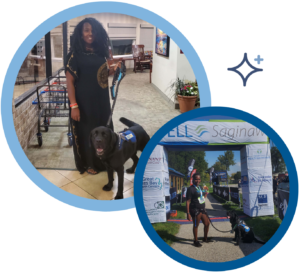 That day on the street, when someone tried to take NIKE from me, I realized how important it is for people to see Black assistance dog handlers. To see us confidently working with our dogs. To see that we belong in these spaces. Visibility challenges stereotypes. Sharing stories creates understanding. Representation builds inclusion.
NIKE is more than an assistance dog. He is my partner, my protector, and my independence. He gives me safety in moments when my body and mind are not in my control. Together, we navigate life as a team—six legs and a tail, moving forward with purpose.
Sharing my story is not easy. But it is necessary.
Disability has no single face. Assistance dogs are for anyone who needs them. By listening, learning, and respecting assistance dog teams, we can create communities where people of color are believed, supported, and safe.
This Black History Month, I honor the history of resilience, visibility, and progress by showing up as my full self—Black, disabled, and empowered. My story, and NIKE’s work beside me, are part of that history too.
I hope my story helps someone feel seen. And I hope it reminds others to look beyond assumptions—because not all disabilities are visible, and you never know who is quietly saving a life at the end of a leash.