This spring, Paws With A Cause (PAWS) is proud to run an Access Campaign, an initiative focused on raising awareness about the barriers people with disabilities continue to face in public spaces. One of the most common and challenging obstacles is being denied entry or service because they have an assistance dog.
For people who rely on an assistance dog, having the same access to public spaces as those without assistance dogs should never be a challenge. It is a legal right and a vital part of daily independence. Yet misunderstandings, lack of education, and misinformation continue to create unnecessary and painful barriers.
That is why public access training is such an essential part of every PAWS assistance dog’s journey.
Training Where It Truly Matters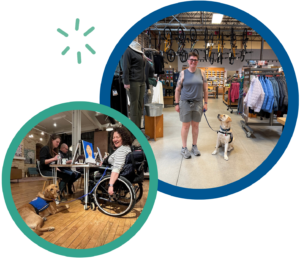
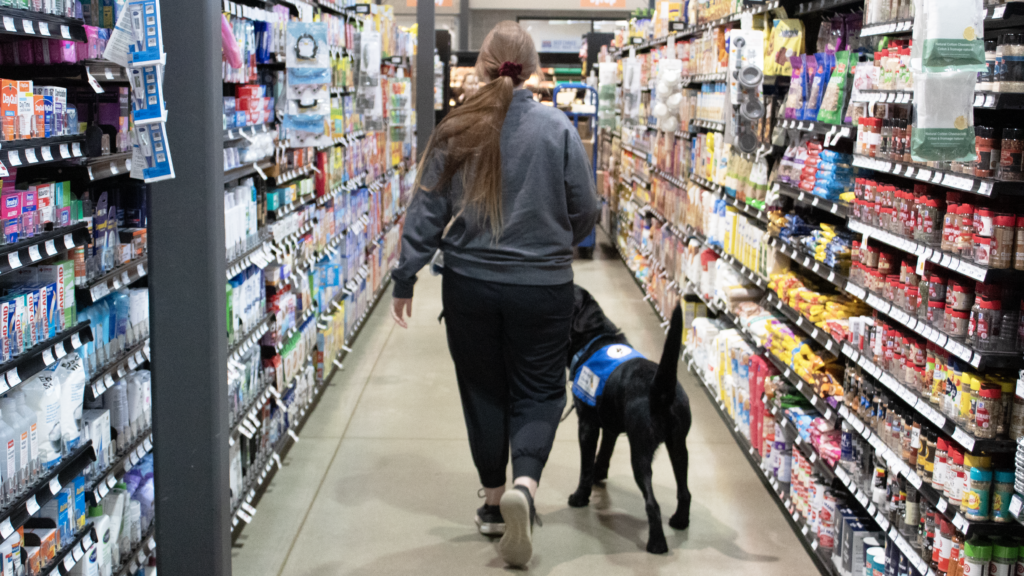
Public access training allows our dogs to learn in the same environments where they will one day work: restaurants, grocery stores, hotels, airports, medical offices, and countless other public spaces. These are the places where their future partners will rely on them for safety, mobility, and independence.
Training in real-world settings helps our dogs:
- Practice their skills in authentic environments
- Learn to remain focused despite distractions
- Build confidence in busy, unpredictable spaces
- Develop calm, professional behavior in public
Assistance dogs don’t work in quiet training rooms. They work in real life. Public access training prepares them for exactly that.
Ensuring Access from the Start
PAWS has long recognized that the environments where dogs train must reflect the environments where they will eventually serve their partners. This requires puppies and dogs in training to have legal access to the same public spaces as fully trained assistance dogs under the Americans with Disabilities Act of 1990 (ADA).
Because of this, PAWS successfully advocated for and helped pass state legislation in Michigan granting puppies and assistance dogs in training the legal right to train in public spaces. This law ensures that our trainers and volunteer puppy raisers can responsibly prepare dogs in the real-world environments they may one day navigate alongside their partners.
Without access to public spaces during training, assistance dogs would not be fully prepared for the environments in which they will ultimately work. Advocacy like this not only strengthens our training program and supports other assistance dog organizations across the state—it also helps safeguard the long-term independence of people with disabilities.
Preparing Dogs for Distractions and Real-Life Challenges
Public spaces are full of sights, sounds, smells, and movement. Shopping carts roll by. Food is dropped. Children run past. Other dogs may be present.
Through public access training, PAWS dogs learn how to stay focused on their handler no matter what is happening around them. They learn that their job comes first. This training ensures that when a dog is placed with a person with a disability, they are dependable, composed, and ready to support their partner with confidence.
Helping the Public Become Comfortable Seeing Assistance Dogs
Public access training also serves another important purpose: it helps normalize the presence of assistance dogs in everyday life.
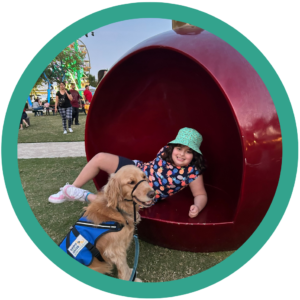
When people regularly see calm, well-trained assistance dogs in public spaces, it builds comfort, familiarity, and respect. Over time, this helps reinforce that assistance dogs are not pets, but highly trained working partners performing essential tasks for people with disabilities.
This awareness is essential. When the public understands what a working assistance dog looks like and how one behaves, it helps reduce confusion and prevents situations where teams are wrongly questioned or denied access to places they are legally allowed to be.
Using Training as an Opportunity for Education
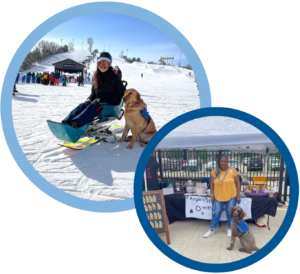 Public access training naturally creates opportunities for conversation. When people ask questions, we can share accurate information about:
• What assistance dogs do
• Who may benefit from an assistance dog
• The rights protected under the ADA
• How businesses and individuals can support access
Education is a powerful tool. Every positive interaction helps build a more inclusive and informed community.
We encourage everyone to visit our Assistance Dog 101 page as an educational resource or the ADA website. Both provide clear guidance on the laws that protect individuals with disabilities and their assistance dogs, as well as inform businesses of the questions they can legally ask an assistance dog team.
The Reality: Access Denials Still Happen
Despite clear legal protections, access challenges remain common.
The PAWS FOR ACCESS: A Global Survey on Assistance Dogs’ Rights, published in Spring 2025 by the International Guide Dog Federation (IGDF) and Assistance Dogs International (ADI), highlighted that people with disabilities across the world continue to experience denial of entry, questioning, and discrimination because of their assistance dogs. This issue is not isolated by geographic location, type of service, or personal characteristics. It is widespread, and it is deeply impactful.
Being denied access doesn’t just delay someone’s plans. It can affect their safety, dignity, and sense of belonging. No one should have to fight for access simply to live their daily life.
This is exactly why our Access Campaign exists.
A Simple Way to Show Support: Free PAWS Window Clings
As part of our Access Campaign, PAWS is offering free window clings to restaurants, hotels, businesses, and public venues. These clings show that your space is a proud supporter of assistance dogs and the people who rely on them.
Displaying a PAWS window cling sends a clear message:
- People with disabilities are respected here
- Assistance dogs are supported here
- Access rights matter here
It is a small action that can make a big difference. For someone navigating the world with an assistance dog, seeing that symbol can provide reassurance, confidence, and a sense of safety before even walking through the door. Request your free window cling here.
Building a More Accessible Future Together
Public access training does more than prepare our dogs. It helps:
- Build confident, capable assistance dogs
- Educate the public
- Advocate for disability rights
- Reduce access barriers
- Create welcoming communities
Through our Access Campaign, we invite you to stand with us. Learn the laws. Share accurate information. Display a window cling. Support assistance dog teams.
Together, we can help create a world where people with disabilities can move freely, confidently, and with dignity—everywhere they go.