At Paws With A Cause, every assistance dog represents hundreds of thoughtful decisions, countless hours of hands-on work, and a team of dedicated professionals committed to changing lives. One meaningful pathway into this work is PAWS’ Trainer Assistant Program.
Designed as an educational, hands-on pathway for individuals interested in becoming PAWS Associate Trainers, the Trainer Assistant Program provides immersive experience, mentorship, and real-world responsibility.
As we prepare to open applications for a new cohort of Trainer Assistants this month, we sat down with Heather, a member of the very first trainer assistant cohort, to learn what the program is like from the inside and how it helped launch her career as an Associate Trainer.
What Is the Trainer Assistant Program?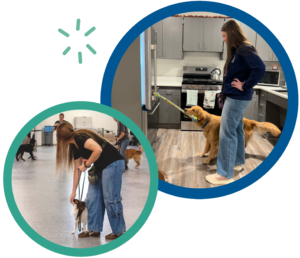
The Trainer Assistant Program is a structured, six-module educational pathway that combines hands-on dog training, mentorship, and professional development. While some participants come in with dog experience, it’s not required.
“The program is designed to give you the tools and resources to go from potentially having no dog experience whatsoever to being able to train assistance dogs,” Heather shared.
Trainer Assistants work closely with the Trainer Assistant Program Coordinator to support dogs with enrichment, handling, advanced obedience, core behaviors, and early task training. Over time, responsibilities increase as skills develop, preparing participants for the transition into an Associate Trainer role.
A Flexible Program with Defined Milestones
The Trainer Assistant Program is self-paced and typically takes about two years to complete, although timelines can vary depending on prior experience and individual progress.
Heather completed the program in just under two years.
“Because it’s self-paced, some modules may take longer than others, and you might finish at a different time than people you started with,” she explained.
The program is organized into six modules, intentionally designed to build upon one another. As Trainer Assistants progress through the program, they combine education with hands-on application, gradually taking on more responsibility as their skills develop.
With a clearly defined module structure, Trainer Assistants gain exposure to multiple assistance dog career paths and training concepts, supported throughout by the Trainer Assistant Program Coordinator.
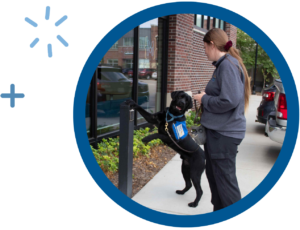
For Heather, that structure was especially meaningful as someone entering the program without a professional dog training background.
“Before I came here, I had no professional dog experience at all,” she said. “My background was completely different, but I had a passion for dogs and wanted to help people. This program felt like the perfect intersection of those things.”
She describes the Trainer Assistant Program as a significant, but well-supported, learning curve. Learning new skills and applying the tools and techniques needed to train an assistance dog takes time, practice, and patience.
Much of that learning centers on understanding canine body language and behavior, assessing each dog as an individual, and determining the lifestyle in which each dog will thrive.
“Learning dog body language takes time, especially when you’re training a dog for assistance work,” Heather explained. “But you have the resources and a fantastic mentor guiding you through it. That support makes a big learning curve feel doable. I continue to learn so much from every dog, client, placement, and fellow trainer.”
Hands-On Training—From the Very Beginning
One of the most distinctive aspects of the Trainer Assistant Program is just how hands-on it is.
From early in the program, Trainer Assistants work with evaluation dogs—dogs who have recently returned from the prison program and are being assessed for their career paths. This provides exposure to a wide variety of dogs, temperaments, and learning styles.
“You get hands-on experience with a ton of dogs,” Heather said. “There’s a lot of turnover in evaluation, so you’re constantly practicing the skills you’re learning.”
As Trainer Assistants progress, they’re assigned training dogs and begin focusing more on task work. By the time Heather completed the program, she was managing a full string of dogs, reflecting her growing skill, confidence, and ability to balance multiple training responsibilities.
Trainer Assistants are also responsible for daily care tasks for the dogs they support, including feeding, routine handling, and basic management. This hands-on responsibility helps build a deeper understanding of each dog’s needs and the full scope of what it takes to support their success.
Mentorship, Support, and Professional Growth
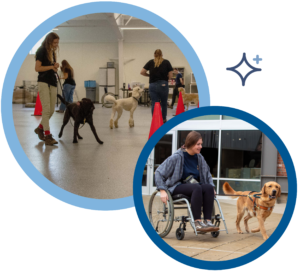
Trainer Assistants are mentored by the Trainer Assistant Program Coordinator, who provides consistent one-on-one guidance, regular feedback, and access to handling classes multiple times per week.
“Kirstin is a fantastic mentor. Extremely patient, especially knowing I came in without dog experience. She has a wealth of knowledge and is a great trainer—for both dogs and humans,” Heather said.
As Trainer Assistants progress and graduate into Associate Trainer roles, mentorship continues. At this stage, trainers transition to working under Crystal, PAWS’ Assistance Dog Training Manager, while gaining greater independence in their training work.
This layered support helps Associate Trainers learn not only how to train dogs, but how to communicate, solve problems, and develop their own professional training style.
“Everybody trains a little differently,” Heather explained. “You’re given the tools, but you also learn how to use them in a way that works for you and for the dog.”
A Clear Pathway to Becoming an Associate Trainer
The Trainer Assistant Program is intentionally designed as a pathway into an Associate Trainer role at PAWS. Every component of the program, from progressive responsibility to client exposure, is built to prepare Trainer Assistants for the realities of professional assistance dog training.
By the time Trainer Assistants complete the program, they’ve gained experience supporting dogs across multiple stages of training and have participated in real placements with clients.
For Heather, that preparation translated directly into readiness for the next step.
“By the time I graduated, I had placed multiple dogs,” she shared. “One of them had already certified.”
She credits the program with not only building technical skills but also helping her understand what long-term success in the role actually looks like.
“You’re learning how to train dogs, but you’re also learning how to problem-solve, communicate with clients, and think like a trainer,” Heather said. “That made stepping into the Associate Trainer role feel like a natural transition, not a leap.”
Graduating Trainer Assistants who move into Associate Trainer positions continue to build on this foundation through advanced task training, increased client responsibility, and ongoing mentorship within the Training Department.
The Moments That Make an Impact
For Heather, the most meaningful part of the program wasn’t just learning how to train dogs; it was seeing firsthand how those dogs change lives.
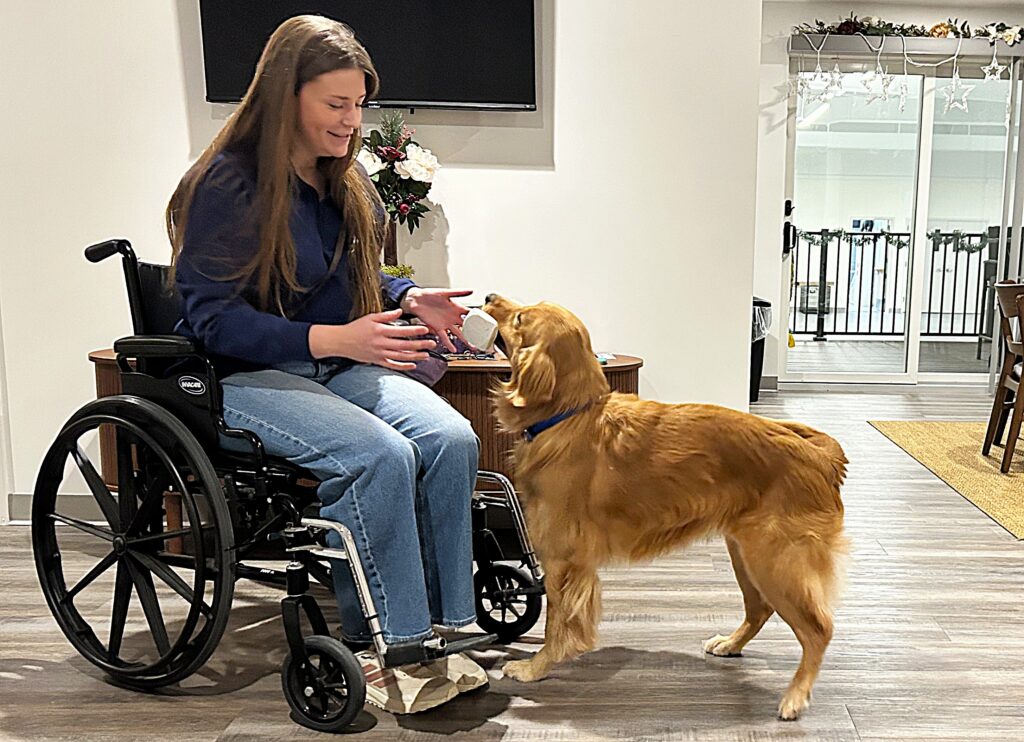
“Within the first 48 hours [of placing a service dog for a child with autism], the client slept through the night for the first time,” she said. “Within the first week, his therapist saw a huge difference in his ability to self-regulate. The impact was immediate.”
That kind of transformation, Heather says, never gets old.
“You can’t put a price on giving someone independence. Getting to be part of that is incredibly motivating.”
Interested in the Trainer Assistant Program?
The Trainer Assistant Program is ideal for individuals who are passionate about dogs, motivated to learn, and excited by the idea of hands-on, purpose-driven work. Prior professional dog experience is helpful but not required.
If you’re interested in building a career training assistance dogs and being part of a mission that changes lives, this may be the path for you. To check for open positions, visit the PAWS careers page.
Note: The Trainer Assistant Program is designed to provide foundational experience and exposure to the skills, standards, and procedures used within Assistance Dogs International (ADI)-accredited programs. However, it does not qualify an individual as an ADI–recognized assistance dog trainer. Participation in this program may help prepare individuals who wish to pursue additional education, mentorship, and formal evaluations toward becoming an ADI‑Certified Instructor.