
Author: Hailey VanderWilt
At Paws With A Cause, we find it important to educate the public about the unique roles of assistance dogs and emotional support animals.
With that awareness comes an important responsibility, knowing what rights each one has. The distinction may sound small, but it has a big impact on access, training, and the lives of the people who rely on these dogs every day.
What Is an Assistance Dog?
An assistance dog (also referred to as a service dog) is individually trained to perform specific tasks to help a person with a disability live more independently. Each dog’s training is custom-tailored to its handler’s unique needs.

At PAWS, these include:
• Service Dogs for people with physical disabilities
• Hearing Dogs for individuals who are deaf or hard of hearing
• Epileptic Seizure Response Dogs for those living with epilepsy
• Service Dogs for Children with Autism for children 12 and younger
• Medical Alert Dogs trained to detect specific conditions, such as diabetic lows
Because their tasks directly relate to a person’s disability, assistance dogs are protected under federal law — specifically, the Americans with Disabilities Act (ADA). This means they have public access rights and can accompany their handler almost anywhere the general public is allowed, including restaurants, stores, and public transportation.
These dogs aren’t pets — they’re highly trained partners, providing independence, safety, and confidence for their handlers every day.
What Is an Emotional Support Animal?

An emotional support animal (ESA) provides comfort and companionship simply through their presence. ESAs are not trained to perform specific tasks related to a disability; this is what sets them apart from an assistance dog.
While emotional support animals can play a vital role in improving mental and emotional well-being, they are not protected by the ADA. This means they do not have public access rights and cannot accompany their handler in public places like stores, restaurants, or other non-pet-friendly spaces.
However, ESAs may be allowed in housing under the Fair Housing Act (FHA) or on airplanes under limited circumstances, depending on airline policy.
So, while assistance dogs are defined and protected as working partners under the law, emotional support animals are recognized as providing therapeutic comfort — an important distinction that affects where each type of dog can go.
Why the Difference Matters
Understanding the difference between an assistance dog and an emotional support animal helps ensure fairness and respect for handlers, businesses, and the dogs themselves.
When an untrained pet is misrepresented as an assistance dog, it can create confusion or even endanger trained working dogs and their handlers. A clear understanding helps everyone know what to expect and how to act appropriately around these amazing animals.
Where Do Facility Dogs and Visiting PAWS Dogs Fit In?
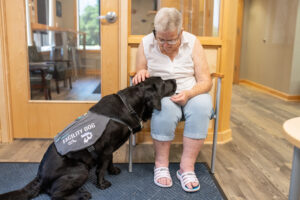
At Paws With A Cause, we’re fortunate to see many types of dogs making a difference. While our assistance dogs work one-on-one with a person with a disability, Facility Dogs and Visiting PAWS dogs serve in a different way.
• Facility Dogs work alongside professionals in places like schools, hospitals, and courts to provide emotional support and motivation to multiple people.
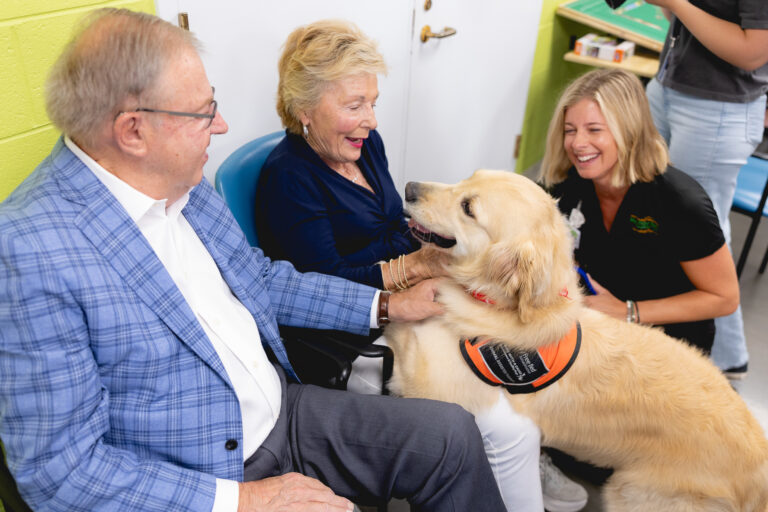
• Visiting PAWS dogs are volunteer dogs and handlers who bring comfort and smiles to people in facilities such as nursing homes or libraries.
Both types of dogs fall under the social support or emotional support category—they are not assistance dogs, and therefore do not have the same public access rights under the ADA.
Still, their impact is immeasurable. Whether calming a child before a court appearance or bringing joy to a hospital room, these dogs remind us just how powerful the human–dog connection can be.
The Takeaway
- Assistance dogs are individually trained to perform specific tasks for a person with a disability and have full public access rights under the ADA.
- Emotional support animals provide comfort and companionship but do not have the same legal access rights.
- Both play meaningful roles in changing lives—just in different ways.
Learn More or Get Involved
Want to dive deeper into ADA rights? Learn more by visiting our Assistance Dogs 101 page.